SPOT PRICE – The price at which an asset trades in the cash market. this is the underlying value of nifty on July 12, 2024, which is 24500.
FUTURE PRICE – The price of the futures contract in the futures market. the closing price of nifty in futures trading is 24521. thus 24521 is the future price of nifty, on a closing basis.
CONTRACT CYCLE – It is a period over which a contract trades. on July 25, 2024, the maximum number of index futures contracts is of a 3-month contract cycle – the near month, the next month. nifty and bank nifty futures contract expires on the last Thursday and Wednesday of the respective month.
EXPIRATION DAY – The day on which a derivative contract ceases to exist. it is the last trading day of the contract. the expiry date in the quotes given is July 25 (nifty). it is the last Thursday of the expiry month.
TICK SIZE – It is the minimum move allowed in the price quotations. exchange decides the tick sizes on traded contracts as part of contract specification.
CONTRACT SIZE AND CONTRACT VALUE – Futures contracts are traded in lots and to arrive at the contract value we have to multiply the price with contract multiplier or lot size or contract size. nifty lot size 25 and bank nifty – 15.
BASIS – The difference between the spot price and the futures price is called the basis. if the futures price is greater than the spot price, the basis for the asset is negative. Similarly, if the spot price is greater than the price, the asset basis is positive.
COST OF CARRY – The cost of carry is the relationship between futures prices and spot prices. it measures the storage cost ( in the commodity market ) plus interest that is paid to finance or carry the asset till delivery less the income earned on the asset during the holding period. for equity derivatives, carrying cost is the interest paid to finance the purchase less dividend earned.
MARGIN ACCOUNT – As the exchange guarantees the settlement of all the trades, to protect itself against default by either counterparty, it charges various margins from brokers. brokers in turn charge margins from their customers.
OPEN INTEREST AND VOLUMES TRADED – An open interest is the total number of contracts outstanding for an underlying asset. volumes traded give us an idea about the market activity with regards to specific contracts over a given period – volume over a day, over a week or month, or the entire life of the contract.
The most confused people in the market are retail traders. Because their decision depends on other’s plan execution before they conclude their decision, they find out that they are already trapped in the executed plan of the others.
We retailers always make future predictions and those predictions may be correct. But who has taken the position?
Predicting the market in an unbiased way is very difficult. People say “Do what you see, not what you want to see”. We must change our mindset and trading psychology to adapt to modern trading infrastructure.
Here we have to ask ourselves a question, who are retailers? If we are retailers then, who are institutions/big people? If we consider money as a difference, a person who has more money is he considered a big person?
No, it’s not like that. For a person having 10 lakhs, 30 lakhs are big. Like that, everybody has their limited source of income & investment. Only the institutions have more sources of income when compared to us.
Here are some notable points the multiple sources of income for these institutions are collected by limited-sourced retailers only. Therefore the enemy is our team only. NBFCs, mutual funds, insurance co., and other institutions are run by the deposits of retailers.
Be independent….
Financial literacy is most important in the Contemporary world. Like everybody says “Be an independent woman” likewise we have to adapt to “Be an independent investor/trader” At the end of the day it’s us only. Nobody will come to the rescue when you are at risk. So, learn to handle risk alone.
Tata Consultancy Services (TCS) reported their Q1 results for FY2024 on July 11, 2024. Here are the key highlights:
Revenue and Profit:
Revenue increased by 5.44% year-over-year (YoY) and 2.25% quarter-over-quarter (QoQ).
Profit grew by 8.72% YoY but declined by 3.17% QoQ.
Expenses and Income:
Selling, General & Administrative (SG&A) expenses rose by 4.63% QoQ but decreased by 1.43% YoY.
Operating income fell by 2.98% QoQ but increased by 12.32% YoY.
Earnings Per Share (EPS):
The EPS for Q1 is ₹33.26, reflecting a 9.91% increase YoY.
Stock Performance:
Over the past week, TCS has delivered a return of -2.42%.
The return over the last 6 months is 5.52%.
Year-to-date (YTD) return is 3.91%.
Market Cap and Stock Range:
TCS has a market capitalization of ₹1,419,629 crore.
The 52-week high is ₹4,254.75, and the 52-week low is ₹3,257.66.
Overall, TCS showed a solid year-over-year performance in revenue and profit growth, although there was a slight decline in profit compared to the previous quarter.
Dear market participants, today also nifty closed in red but again it took support at 24200 as we discussed this week contracts closed between 24200 to 24500. Form tomorrow new contracts will start and we should look for some data before we take new positions.
FII bought 3.06 Laksh index future and in options, they bought 1.58L so they are slightly bullish in derivatives. In cash, they sold 1137cr.
DII’s sold 76,595 index futures and in options they sold 3.93L. in cash, they bought 1676 cr
Clients are neutral in the future and options.
If we look at Global markets US markets are negative and Europe markets are bullish and Asian markets are also
The volatility index fell 03%, that closed at 14.
As per open interest nifty has 24200 followed by 24000, which has the highest put seller. there are negligible call sellers at 24400 and in 24500.
Nifty has strong support at 24200. But this month’s Q1 results are coming so for positional trade there will be much volatility, the union budget is also there so overnight positions are risky at this time. so please avoid that and focus on intraday movement with strict stop loss. Strong support is at 24200 and upside resistance is 24500.
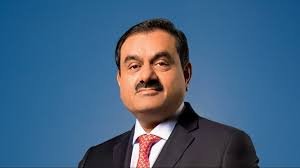
Adani Group's Vizhinjam Port Welcomes First Mothership, Elevating India to Global Status
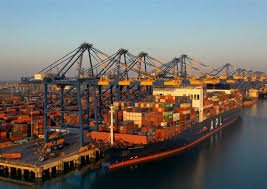
Thiruvananthapuram: Adani Group’s Vizhinjam Port, India’s first trans-shipment port near Kovalam Beach in Kerala, received its first mothership, the ‘San Fernando’ from Maersk, the world’s second-largest shipping company. The ship arrived with over 2,000 containers, marking a historic moment.
The vessel was welcomed with a traditional water salute before successfully docking. This arrival positions Vizhinjam Port among the top global ports, ranking 6th or 7th.
State Ports Minister V.N. Vasavan, Adani Port officials, and senior state government officials were present to welcome the ship. An official ceremony will be held on Friday, attended by Union Minister Sarbananda Sonowal, Chief Minister Pinarayi Vijayan, and Adani Ports Managing Director Karan Adani.
Those present to receive the mothership included State Ports Minister V.N. Vasavan, officials from the Adani Port and senior state government officials.
The official function will take place on Friday. It will be attended by Union Minister for Ports, Shipping and Waterways Sarbananda Sonowal, Chief Minister Pinarayi Vijayan and Adani Ports and SEZ Ltd (APSEZ) Managing Director Karan Adani.
Soon after the official inauguration, the mothership will move to its next destination at Colombo and after that many more ships are scheduled to arrive with cargo.
Friday will mark the official completion of the first phase of the port, which has a 3,000-metre breakwater and 800-metre container berth ready.
Jefferies Predicts Jio’s $112 Billion Valuation and Weighs IPO vs. Spin-Off for RIL
Jefferies, a foreign brokerage, recently released a note discussing the potential value of Reliance Industries Ltd (RIL)’s telecom business, Reliance Jio Infocomm (Jio), which could reach $112 billion if it goes public. At the current exchange rate of 83.49, this translates to 9.35 lakh crore.
Jefferies outlined two possible scenarios for Jio’s public listing: an Initial Public Offering (IPO) or a vertical spin-off. They noted that RIL investors seem to prefer the spin-off route. Regardless of the chosen method, Jefferies anticipates Jio could go public in 2025.
Jio currently has 33.7% minority shareholders.To meet the IPO requirements, RIL could list 10% of Jio’s shares. Since Jio has already completed its major capital expenditure phase, the IPO could entirely be an Offer for Sale (OFS) by minority shareholders.
For an IPO, 35% of the shares must be reserved for retail investors, which requires significant interest from this group. Any unsubscribed portion could be allocated to High Net-worth Individuals (HNI) or Qualified Institutional Buyers (QIB) based on their oversubscription. Even after the IPO, RIL would retain majority control. However, Jefferies pointed out that the Indian stock market typically applies a 20-50% discount to the value of a holding company (holdco) when calculating its fair value.
In the vertical spin-off scenario, RIL might avoid this holdco discount but would have a lower stake in Jio. In this case, RIL could spin off Jio and list it independently after a price discovery process. RIL shareholders would receive shares in Jio proportionate to RIL’s 66.3% stake in Jio. This method could unlock better value for RIL shareholders, with the owner’s stake in Jio dropping to 33.3% after listing.
Jefferies noted that the recently spun-off Jio Financial Services (JFS) saw a similar situation where the owner’s stake was 45.8% at listing. The strong performance of RIL and JFS stocks since the spin-off, along with the less-than-majority stake in JFS, might make RIL more inclined towards the spin-off route for Jio.
The primary concerns for investors include the holdco discount of 20-50% in India, which is even higher (50-70%) in conglomerates in Korea and Taiwan, and the need for large retail investor interest in the case of an IPO. If Jio is spun off, RIL might address the lower controlling stake by buying shares from private equity funds post-spin-off.
Jefferies estimates that if Jio is demerged, RIL’s fair value would be Rs 3,580, offering a 15% upside. If Jio goes public through an IPO, RIL’s fair value would drop to Rs 3,365 in the base case scenario, considering a 20% holdco discount.
Vedanta plans to raise Rs 8,000 crore through a QIP, appoints bankers for the issue.
Vedanta, a major company, announced that it is raising ₹1,000 crore by issuing 1 lakh non-convertible debentures (NCDs), each worth ₹1 lakh, through a private placement. These NCDs will be listed on the BSE (Bombay Stock Exchange).
Vedanta’s stock has risen by 74% this year, largely due to the company’s plan to split its six core businesses into six separate companies. This demerger plan aims to create more value for shareholders and improve operational efficiency. Shareholders of Vedanta will receive one share of each of the five new companies for every share they currently own in Vedanta. This demerger is expected to be completed by the end of the current fiscal year.
Over the past five years, Vedanta’s revenue has increased significantly from ₹84,447 crore in FY2020 to ₹143,727 crore in FY2024. The company also turned a loss of ₹4,743 crore in FY2020 into a profit of ₹7,537 crore in FY2024. However, profits have decreased from a peak of ₹23,709 crore in FY2022.
Vedanta’s history dates back to the 1980s when it started as Sterlite Industries. The company expanded and is now headquartered in London under its parent company, Vedanta Resources Plc. In 2007, Vedanta acquired Sesa Goa and later merged the two companies to form Sesa Sterlite, which was eventually renamed Vedanta Ltd.
Dear market participants, today nifty closed in red. As per our yesterday view, every dip allows bull entry today it happened. For the next trading session, we have to look at our traditional important points.
FII bought 3.38 lakhs index future and in options they have bought 4.32L calls and 3.74L puts. so they are bullish on futures and options also.
DII’s sold 76,267 index futures and in options they bought 3.95L puts and 2078 calls only. so there is negligible bearish.
Clients are neutral about the future and options.
If we look at Global markets US markets and Europe markets are bullish and Asian markets are also slightly positive.
Volatility index up by 1.07%, which closed at 14.43. because of budget. it would get
As per open interest nifty has 24200 followed by 24000 has the highest put seller and 24400 has the highest call seller.
From the last few trading sessions nifty keeps getting support at 24200 but it sustained above 24200 but now it looks weak support. So if you buy when the market comes at 24200 the chance of profit is low. For tomorrow nifty may be in the range of 24000-24400. And weakly expiry is also there so please take any decision only at support and resistance level that is 24200-24400 with strict stoploss. When the market is In between support and resistance level taking any side view is risky.
A forward contract is an agreement made directly between two parties to buy or sell an asset on a specific date in the future, at the terms decided today Forwards are websites used in commodities, foreign exchange, equity, and interest rate markets.
FEATURES – It is a contract between two parties.
All terms of the contract like price, quantity and quality of underlying, delivery terms like place, settlement procedure, etc.. are fixed on the day of entering into the Contract.
MAJOR LIMITATION OF FORWARDS
LIQUIDITY RISK – It is nothing but the ability of the markets participants to buy or sell the desired quantity of an underlying asset .As forwards are tailor made contract the terms of the contract are according to the specific requirements of the parties .
COUNTERPARTY RISK – Counterparty risk is the risk of an economic loss from the failure of counterparty to fulfil its contractual obligation.
INTRODUCTION TO FUTURES
Futures markets were innovated to overcome the limitation of forwards. a futures contract is an agreement made through an organized exchange to buy or sell a fixed amount of a commodity or financial asset on a future date at an agreed price. simply, futures are standardized forward contracts that are traded on an exchange. the clearinghouse associated with the exchange guarantees the settlement of these trades. a trader, who buys futures contracts, takes a long position and the one, who sells futures takes a short position. the words buy and sell are figurative only because no money or underlying asset changes hand, between buyer and seller, when the deal is signed.
FEATURES OF FUTURES CONTRACTS
Contracts between two parties through exchange.
Centralised trading platform
Price discovery through free interaction of buyers and sellers
The sale of a 7.84% stake in Glenmark Life Sciences by Glenmark Pharma, as approved by its board, involves several key details and processes. Here’s a detailed explanation:
Key Points:
Stake Details:
Percentage: 7.84% of Glenmark Life Sciences’ total equity.
Number of Shares: 96,09,571 equity shares.
Approval and Announcement:
The board of Glenmark Pharma approved this transaction.
The announcement was made via an exchange filing on June 10.
Method of Sale:
Offer for Sale (OFS): The shares will be sold through the stock exchanges using an OFS mechanism.
Offer for Sale (OFS):
An OFS is a method by which listed companies can sell their shares through an exchange platform. Here are the steps and features of an OFS:
Mechanism:
The OFS mechanism is a transparent process, typically used by promoters of publicly traded companies to sell shares.
It is conducted on the stock exchange over a specific period, allowing a wide range of investors to participate.
Eligibility:
OFS can be used by companies listed on a recognized stock exchange in India.
Only the promoter/promoter group entities can offer shares through this mechanism.
Process:
Announcement: The seller (Glenmark Pharma in this case) announces the details of the OFS, including the number of shares on offer, floor price, and the date of the sale.
Bidding: Investors can place bids for the shares during the OFS period. The bids can be at or above the floor price.
Allotment: Shares are allotted to bidders based on the bids received, typically on a proportionate basis if there is oversubscription.
Regulations:
The OFS process is regulated by the Securities and Exchange Board of India (SEBI), which sets guidelines to ensure transparency and fairness.
Implications for Glenmark Pharma and Glenmark Life Sciences:
Glenmark Pharma:
Liquidity: The sale of this stake will provide liquidity to Glenmark Pharma, which can be used for various purposes such as debt reduction, funding new projects, or other strategic investments.
Valuation Realization: The sale through OFS allows Glenmark Pharma to realize the value of its holding in Glenmark Life Sciences based on current market prices.
Glenmark Life Sciences:
Market Perception: The sale of shares by the promoter can impact market perception. However, since this is a sale through an OFS, it is typically seen as a routine financial transaction rather than a reflection on the company’s fundamentals.
Shareholding Pattern: The stake sale will lead to a change in the shareholding pattern of Glenmark Life Sciences, potentially increasing the free float and liquidity of the stock in the market.
Conclusion:
The sale of a 7.84% stake in Glenmark Life Sciences by Glenmark Pharma through the OFS mechanism is a strategic financial move to unlock value and provide liquidity. This method ensures a transparent and regulated process for selling shares in the market, benefiting both the company and investors.